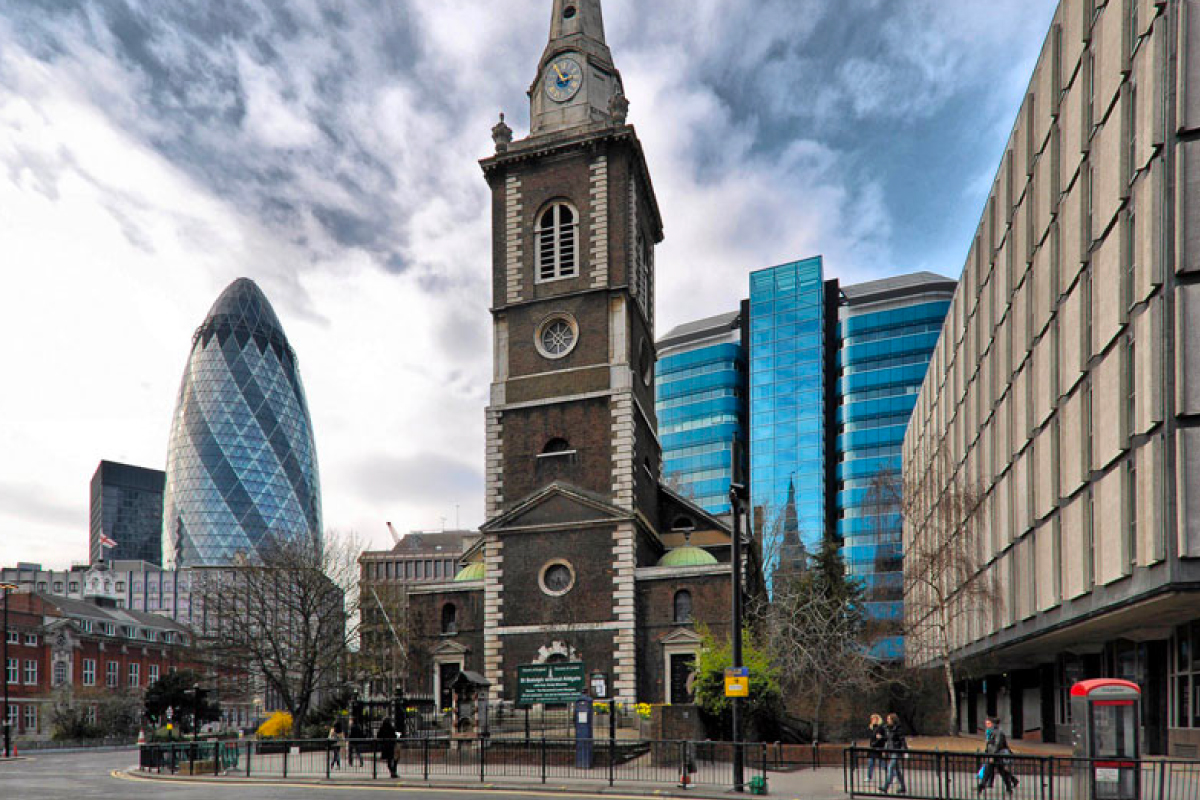
St. Botolph’s Church
The Company is also proud to be affiliated with the Church of St Botolph’s-without-Aldgate. This City Church was built in the mid-18th Century at the site of the old Roman Eastgate to the City and is dedicated to the patron saint of Travellers. Designed by George Dance the Elder it is one of the City’s finest Churches.The affiliation builds on the tradition of the Guilds and Liveries of the City of London having a Guild Church. Our Company Coat of Arms is designed into the west window of the Church.
The Rev. Laura Jorgensen is the Rector of St Botolph’s.
Mary Hare School
Miss Mary Hare qualified as a teacher of the deaf at the age of 18 and opened her first school in 1916, in West Sussex, having previously taught children in her own home. She devoted her entire life to teaching as well as promoting the idea of oral education for deaf children. She was determined to prove to the hearing world that deaf children were capable of academic excellence and today the Mary Hare organisation still follows her principles, believing that all children should have the opportunity for academic and personal success. Miss Mary Hare was honoured with a blue plaque being unveiled in St. Michael’s Place, Brighton in April 2024. Mary Hare School is a registered charity.
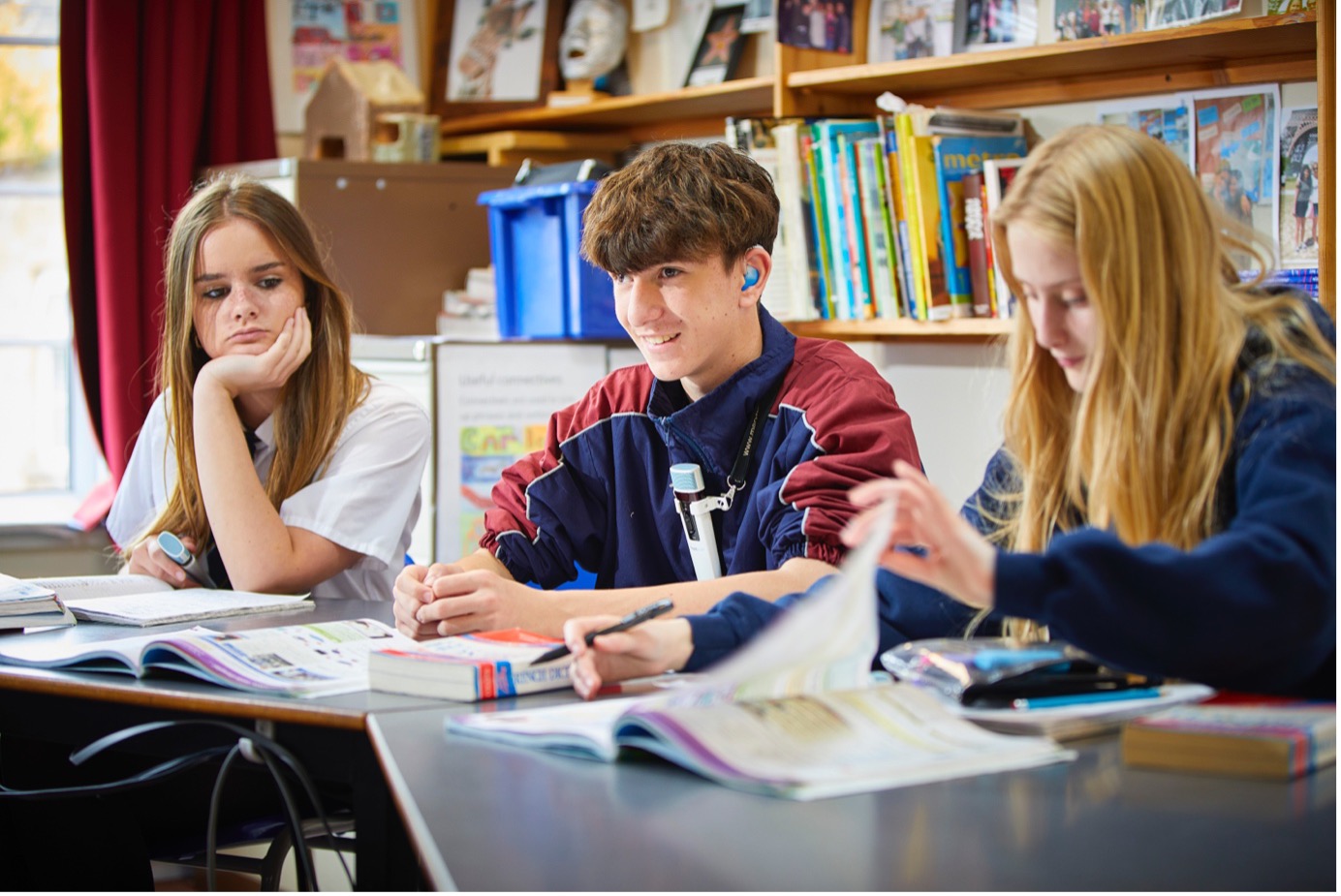
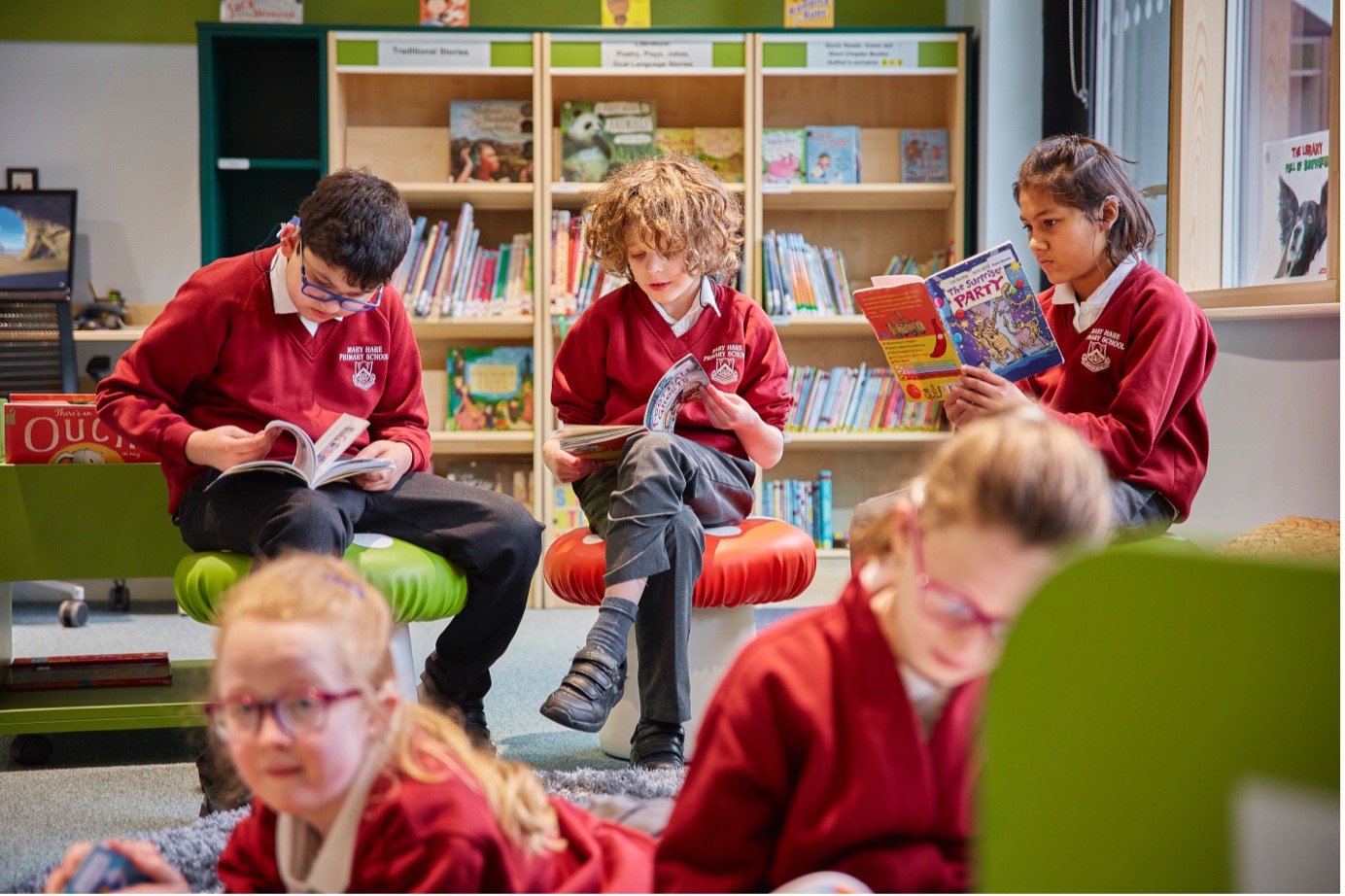
Mary Hare welcomes pupils from reception age to 18 years of age, educating around 220 profoundly and severely deaf young people each year, from all over the UK. The last Ofsted inspection was in February 2020 and the School was found to be ‘Good’. Many pupils go on to university when they leave, whilst others choose an apprenticeship or move directly into employment.
Robin Askew took up the role as Principal in September 2022, having previously been Vice Principal for many years.
The School provides specialist support including a team of Speech and Language therapists, a full audiology department, qualified Teachers of the Deaf, specialist Teaching Assistants, technologies to amplify sound in the classroom and a learning environment designed to optimise pupils’ use of their residual hearing.
Language is at the heart of the education we provide, and we place a great emphasis on the development of language skills, both in and out of the classroom.
All staff teach using an auditory/oral approach, without the use of signing. Many pupils who come to Mary Hare School do so because they are not happy in their local school. A deaf pupil can feel isolated if they are the only deaf child in a school. It is also not easy to learn in a large class where background noise and poor acoustics make hearing the teacher and other pupils almost impossible, even if the teacher is wearing a microphone.
Jasper joined Mary Hare School in year 7. This is what his mum said about his previous school:
“Being the only deaf pupil at school meant that having a deaf peer group was increasingly important to Jasper. He wanted to have friends who were like him, who understood how he felt and who had faced similar challenges. He also wanted a school where he was challenged academically and where he felt he would be given the same opportunities as his hearing peers. The most significant change we saw in Jasper [after joining Mary Hare School] was his growth in confidence. He is happy, settled and achieving academically. We have seen him grow and mature into a confident young person with a positive set of friends and peers.”
The Mary Hare organisation is more than ‘just’ a school. In 2006, Arlington Arts Centre was opened on the Mary Hare School campus. This unique venue is the only one of its kind specifically designed with the needs of deaf people to the fore.
As well as housing the Music teaching department and a recording studio for the school, the Centre contains a Music Therapy Unit, a 250-seat theatre and a suite of Meeting / Seminar Rooms, all of which are open to the public.
Our hearing aid repair service and our high street Hearing Centre in Newbury offer unique, specialist advice and support for adults with hearing loss. Our Training Services division runs a wide range of development opportunities for professionals – ranging from short course seminars to major international conferences and post-graduate training (in association with the University of Hertfordshire).
New College Worcester
New College Worcester (NCW) is a residential school and college for young people who are blind or partially sighted, aged 11-19. Underpinning all that we do is the recognition that a young person’s needs are about more than just their visual impairment. That is why we offer every student a tailored programme of education, mobility and Independent Living Skills to support them in reaching their full potential, both in and beyond the classroom.
Our students can access the full range of National Curriculum subjects, plus a variety of outdoor and leisure activities, from acoustic rifle shooting to rock climbing. In short, they benefit from a wealth of opportunities, which promote self-confidence in an enjoyable way.
Over the years, NCW has developed an enviable reputation for academic achievement. Our teachers are all specialists in their subject and additionally qualified to teach children and young people who are visually impaired. They also have a remarkable flair for developing our students’ self esteem, which is vital to learning. The result is young people who flourish, both as students and individuals.
Outreach Programme – Supporting Visually Impaired Students across the UK
NCW runs an Outreach Programme which provides cirriculum, support, advice. training and information to schools and colleges, offering practical solutions and resources for teachers and visually impaired students in mainstream settings.
Outreach ProgrammeAs part of the Outreach Programme, we have a dedicated Outreach Officer, who responds to hundreds of enquiries from professionals seeking help for various things such as enlarging written material, braille, mobility, tactile diagrams, access technology, practical lessons and social and emotional support.
NCW staff also lead training for professionals working with visually impaired students and run a three day residential GCSE revision course for visually impaired students from all over the UK every Easter holiday.
Fundraising
The College covers the basic costs of tuition and residence through the student fees charged to local authorities and the Learning and Skills Councils.
All capital developments, investments in new technologies and new projects are funded through fundraising activities, grants and donations.
Fundraising has raised money for a range of College activities from a life changing trip to Nepal, braille and magniciation devices, music workstations, to the refurbishment of residential lounges and kitchens.
The College is also planning larger developments, including the refurbishment and extension of ILS (Independent Living Skills) facilities and the extension and improvement of our multigym and sports facilities.
College History
In 1866, a school for boys, Worcester College for the Blind, started at the Commandery. They rented the Sidbury wing of this house which had acted as Charles II’s headquarters before the Battle of Worcester. The need for more space led the College to move in 1887 to Slaughter’s Court, a house in Powick. However, this was still rented. In 1902 Worcester College gained a permanent home on the Whittington Road site. The school site had been purchased by Miss Eliza Warrington from the Sebrights in 1897.
An important change came in 1936 when the then National Institute for the Blind undertook all financial responsibility for the College. After the passing of the 1944 Act, Worcester College for the Blind was designated as a grammar school for blind boys.
The establishment of Worcester College for the Blind in 1866 gave boys the opportunity to progress on to higher education, but there was no such establishment for girls until Chorleywood College was set up by the National Institute for the Blind in 1921. The school was located in the Cedars, a large Renaissance-style mansion in Hertfordshire. After the Education Act of 1944, the school was designated as a grammar school for girls.
In 1987, Worcester College for the Blind, a boys’ school, merged with Chorleywood College for Girls, and the school site became the home of RNIB New College Worcester. In June 2007, the new school became independent as New College Worcester.